
DirtFlight / How to subdivide land
Guide
How to subdivide land into lots, step by step.
A minor subdivision turns one parcel into a few lots that can be sold separately. Here is the order the work usually runs in, what each step tends to cost, and where deals go wrong.
Short answer
To subdivide land, confirm your county allows the split under its minimum lot size and road frontage rules, have a licensed surveyor draw the lots and a plat, test each lot for septic, give every lot legal access, get county approval, and record the plat. A simple minor subdivision commonly takes about two to six months and often runs in the low to mid thousands of dollars per lot before any road or utility work, but rules, fees and timelines vary by county. This guide is general information, not legal advice. Ask your county planning office first.
Read this first. This guide is general information. It is not legal advice and it is not surveying advice. Subdivision rules vary by county and sometimes by city or township. Before you sign, record or sell anything, talk to the county planning office, a licensed surveyor and a real estate attorney.
What a minor subdivision or lot split is.
A subdivision is the division of a parcel into two or more lots for sale or development. Local governments regulate it to make sure the new lots are usable and safe and fit the physical features of the site (American Planning Association, subdivision overview). Many counties and cities have a lighter track for small splits, often called a minor subdivision, lot split or short plat. What qualifies is set locally. A common pattern is a small number of lots, all on an existing public road, with no new street. Your county may set the line at two lots, four lots or something else, and some count every lot cut from the same tract over the years.
Splitting by writing a new deed without approval is the classic mistake. In many places that makes a lot that cannot get a building permit, a loan or title insurance. Call the planning office before you sign anything.
The steps, in the order they usually run.
- Check zoning and the subdivision rules.Find the minimum lot size, minimum road frontage and setbacks for the zone, and whether your split is a minor subdivision. Also read the deed for restrictions, and tell your lender if there is a mortgage, since the lien usually has to be released or split.
- Hold a pre-application meeting.Most planning offices will meet before you file. Bring a sketch. It is the cheapest way to hear about road standards, drainage and septic rules.
- Survey and plat.A licensed land surveyor sets corners, measures the lots and prepares the plat. The plat is the legal drawing the county reviews and records. A map from any other source is not a plat.
- Test for septic.If there is no public sewer, each lot needs a place for a drain field. In most states the local health department issues the permit and a site evaluation tests soil, traditionally with a percolation test, and sets back from property lines, wells and water (EPA, frequent questions on septic systems).
- Access, easements and utilities.Each lot needs legal access, either frontage on a public road or a recorded easement, plus a driveway permit from the road authority. Ask the power and water providers what a connection costs.
- Apply for approval.File the plat and application with the fee. Staff review it, sometimes a planning commission hears it, and you may be asked to revise.
- Record and re-parcel.Record the approved plat with the county recorder or register of deeds. The county then assigns new parcel numbers and splits the tax bill.
- Market the lots.Buyers want each lot's boundary, acreage, road frontage, terrain and what is nearby, in one place. See how Dirt Flight builds a full pack for every lot from a plat.
In pictures
What the steps look like on a real subdivision.
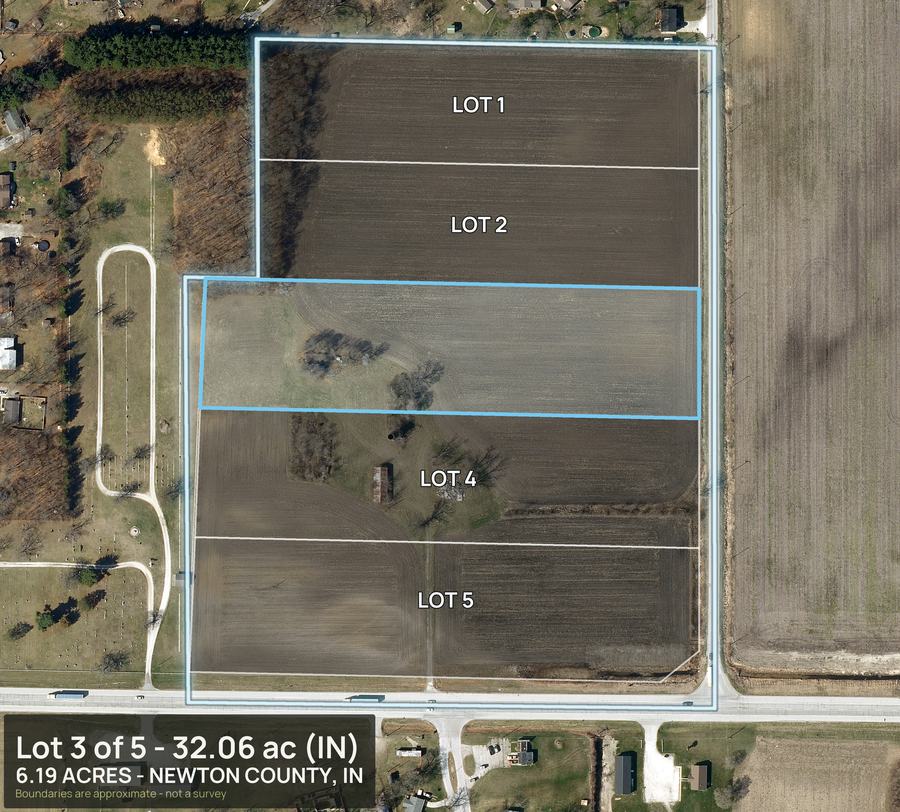
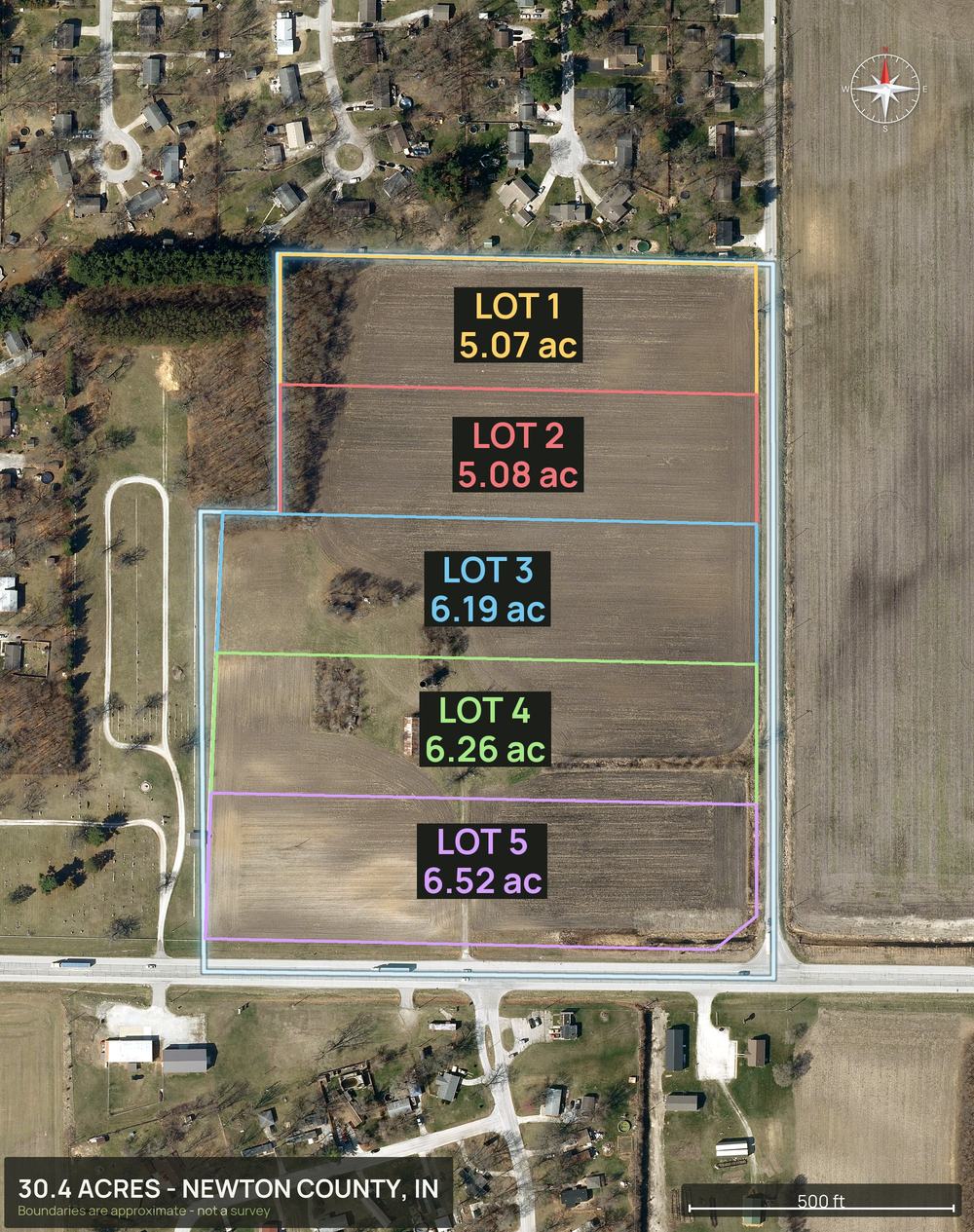
A real five lot split in Newton County, Indiana, followed from the parent parcel to finished lot marketing. The county approval, the survey and the recording are the owner's job and happen on paper; these pictures show what you can see and market at each stage.
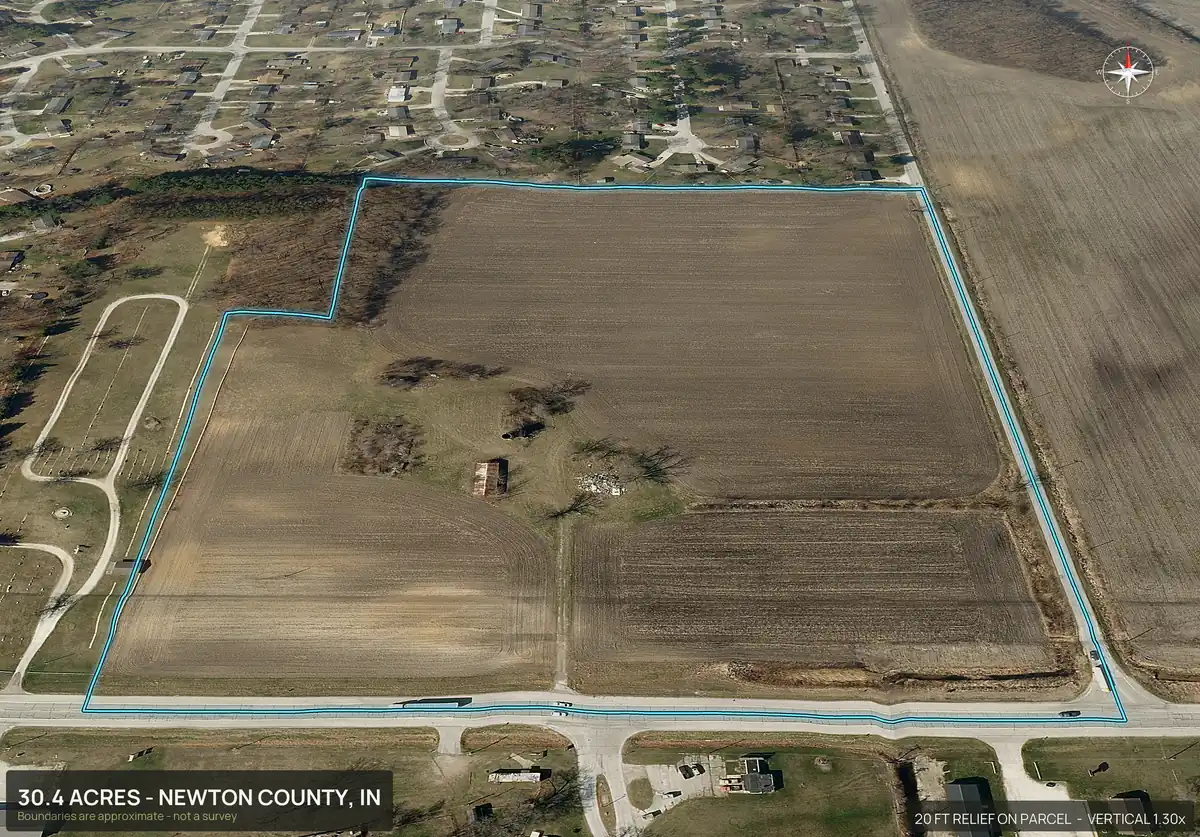
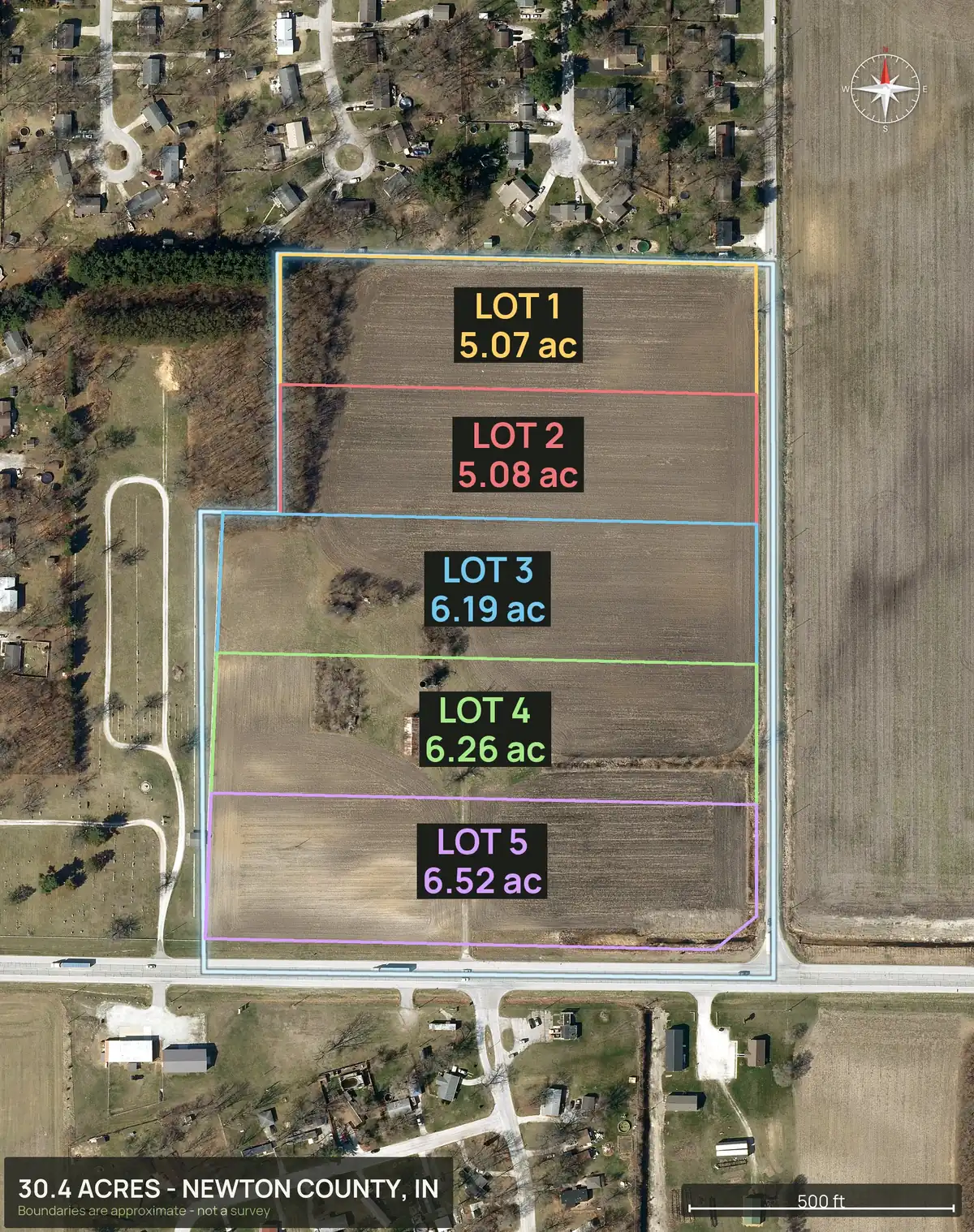
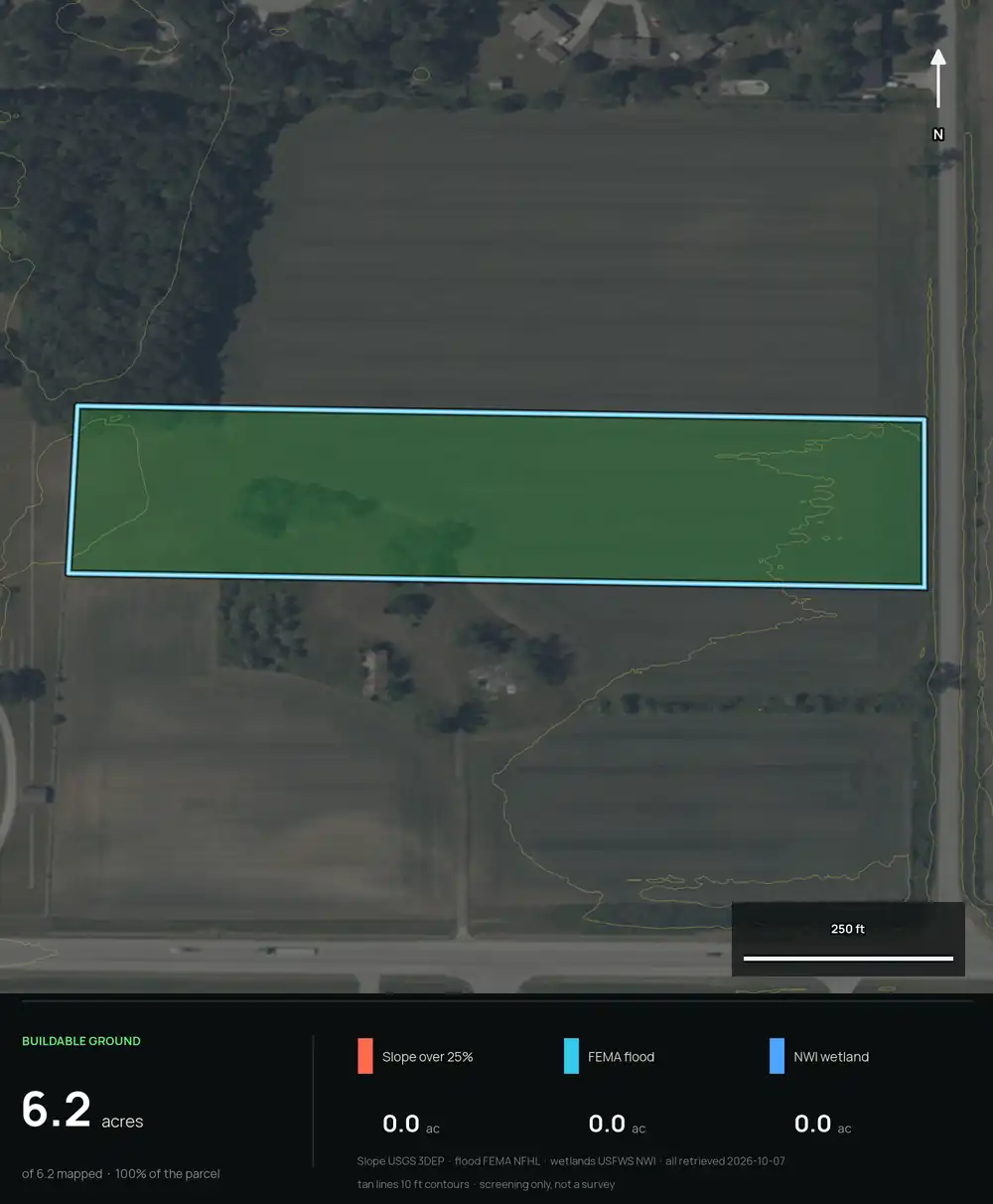
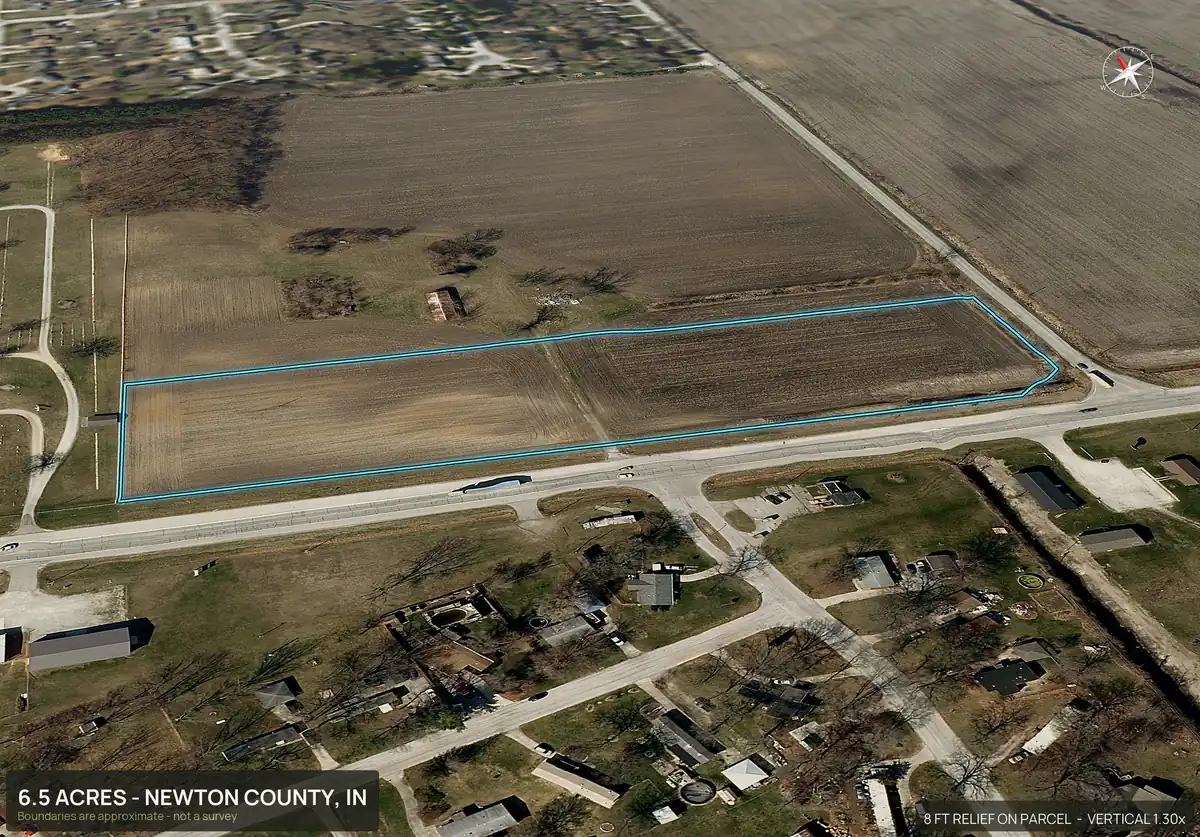
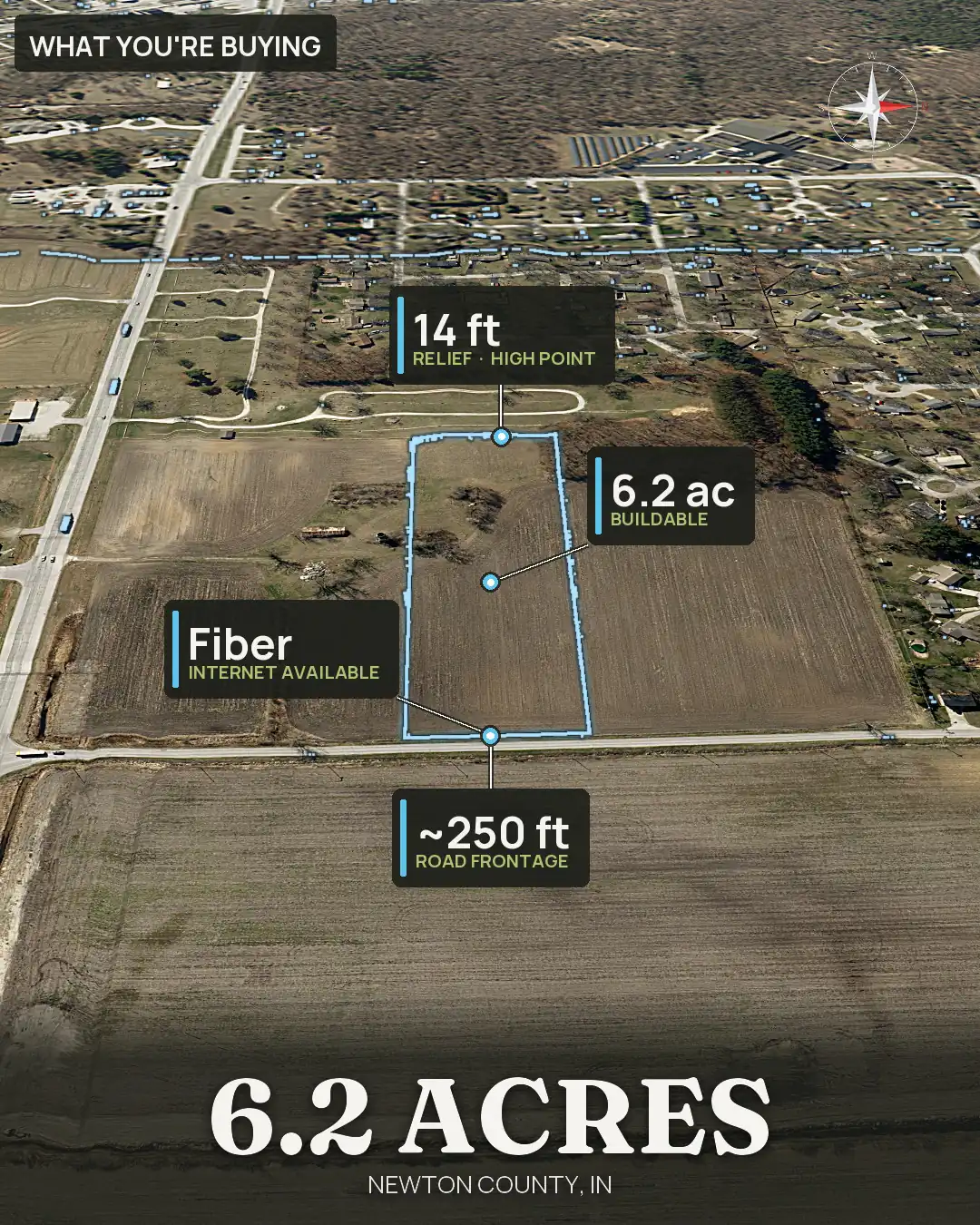
A marketing rendering of a real subdivision. Lot lines come from a recorded plat and are approximate. This is not a survey, and it is not legal advice. Check the rules with your county planning office before you split.
Dirt Flight
How Dirt Flight helps.
Dirt Flight does not approve or survey a subdivision. It takes over once the lots exist on paper, for the marketing.
- Upload the surveyor's plat PDF.Even a plat printed from CAD works. You can also upload a KML, GeoJSON or zipped shapefile of the lots.
- It reads the lot lines and acreage.Dirt Flight takes the lot lines and the acres straight from the plat and fits them to your parcel.
- A full marketing pack for every lot, plus the parent.Boundary aerial, 3D views, orbit video, ground facts and a listing page for each lot, in minutes, with one share page and one download for the whole subdivision.
See subdivide land photos for what each lot gets. The result is a marketing rendering. Boundaries are approximate and are not a survey.
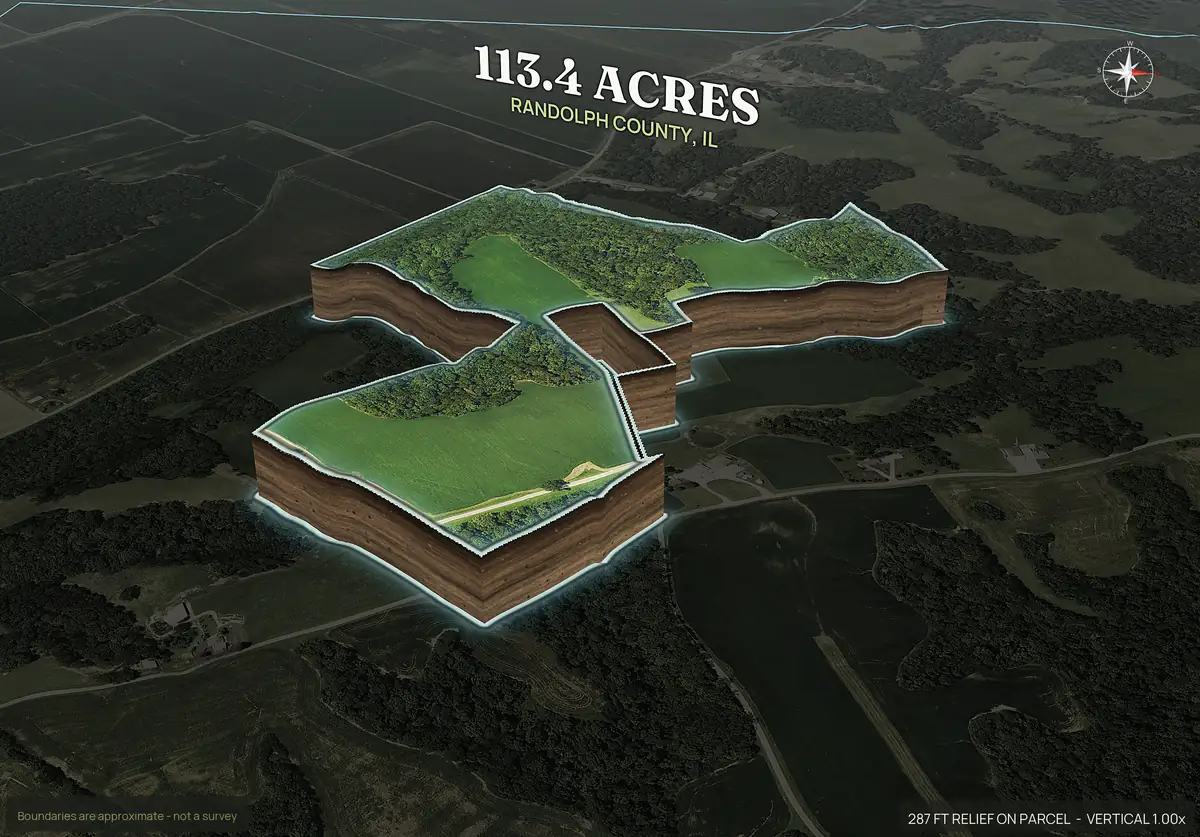
A parcel before the cut.
Before paying for a survey, a pop-out shows what the tract is made of: the open ground, the timber and the layers under it. A parcel with two arms or a pond shows up before the lines are drawn. This general view is not a plat.
Adjoining parcels
Selling adjoining parcels, whole or as lots.
Not every sale starts with a new plat. When you already hold several adjoining parcels, one buyer may want the whole holding and another only one piece of it, and each parcel you already have can be listed as a lot. Dirt Flight renders the adjoining parcels as one tract and each parcel as its own lot in a single run, so you get one listing pack for the whole tract and one for each lot, ready for whichever way a buyer asks.
If the tract also has to be cut into new lots, render it first and then split it into lots you draw or upload. The county decides whether a split is allowed, and the result is a marketing rendering. Boundaries are approximate and are not a survey. See adjoining parcels on the subdivide land photos page for how the set works.
Subdivide / Multi-parcel pack pricing.
Subdivide / Multi-parcel pack: $149 for the whole tract plus up to 5 lots. 6 or more: contact us for a quote. Free for a limited time, like every pack.
Typical costs and timelines.
These are rough planning ranges, not quotes, and they vary widely by county, terrain and who you hire. Use them to decide what to ask, then get real numbers from your surveyor and the planning office.
| Item | Typical range | What drives it |
|---|---|---|
| Survey and plat | A few thousand dollars, more for large or wooded tracts | Acreage, terrain, number of lots, how well the corners are already marked |
| Septic site evaluation | Several hundred to a couple of thousand dollars per lot | Soil, season, the local health department's method |
| Application and review fees | Often tens to a few hundred dollars per lot, sometimes more | County fee schedule, hearing required or not |
| Recording the plat | Usually a modest fee set by the recorder | Pages and number of documents |
| Road, drainage and utility work | Zero if each lot already fronts a public road, large if you must build a road | Whether the county requires improvements before approval |
| Time, start to recorded plat | About two to six months for a simple split, longer with hearings, variances or new roads | Surveyor backlog, review schedule, weather for soil tests |
Add legal fees if you use an attorney, and the cost of marketing and selling the lots.
Common pitfalls.
- Splitting without approval. An unapproved deed split can leave lots unbuildable and unfinanceable.
- A lot with no septic site. Test before you promise a buyer a home site.
- Landlocked lots. Interior lots need a recorded easement wide enough for the road authority and fire access.
- Flood and wetland inside a lot. A lot can meet minimum acreage and still have little ground you can build on.
- Minimum frontage. Odd shaped lots often fail the frontage rule even when the acreage is fine.
- Lender and tax surprises. A mortgage needs a partial release, and land in an agricultural or current-use tax program can owe back taxes when it is split.
- Selling before the plat is recorded. Many places bar it.
Screen the lots before you pay a surveyor.
A quick look at slope, flood, wetlands, soils and road frontage tells you whether a layout is worth surveying. A Dirt Flight pack screens those in about ten minutes. It is not a survey and does not replace the plat, the septic test or county approval. See the land due diligence checklist for what each item needs.
Before you act. Not legal or surveying advice. Rules, fees and timelines vary by county. Consult the county planning office, a licensed surveyor and an attorney before you split, record or sell.
Sources and where to check.
Subdivision rules are local, so the county or city planning office is the authority for your parcel. General background: American Planning Association, subdivision overview; EPA, frequent questions on septic systems. This page is general information and not legal, survey or engineering advice.
Straight answers
Questions people ask about this.
What is a minor subdivision?
A lighter approval track many counties use for a small split, often a few lots on an existing public road with no new street. The exact definition and lot limit are set by your county or city.
How much does it cost to subdivide land?
For a simple split, planning ranges are a few thousand dollars for survey and plat, plus septic testing, application fees and recording. A road or utility extension can add far more. Costs vary by county, so ask your surveyor and the planning office.
How long does it take to subdivide land?
A simple minor subdivision commonly takes about two to six months from the first county call to a recorded plat. Hearings, variances and new roads take longer.
Do I need a survey to subdivide land?
Almost always. The county reviews and records a plat drawn by a licensed surveyor. A map from other sources can help you plan the layout but it is not a plat.
Can I split land with a deed alone?
In many places you cannot sell or build on a lot created that way without county approval. Check with the planning office before you sign or record anything.
Does every lot need septic approval?
If there is no public sewer, usually yes. The local health department generally issues the permit after a site evaluation, so test each lot before you sell it.
Can Dirt Flight subdivide land for me?
No. Dirt Flight does not approve or survey a subdivision. Once you have a plat or a drawing of the lots, it splits the parcel into lots and renders a marketing pack for each one. See the subdivide feature page.
Can I market adjoining parcels together and separately?
Yes. Dirt Flight renders adjoining parcels as one tract and each parcel as its own lot in the same run, and each choice comes back as its own listing pack, so you can list the whole tract and the lots side by side. Cutting a parcel into new lots is a separate step that still needs the county's approval first.
Free for a limited time.
Make an account, enter an APN, and the pack renders in about ten minutes. After launch, Dirt is $29 a parcel, Paydirt is $79, PayDirt Pro is $199 a month for 20 Paydirt packs, and Pro+ is $299 for 45.
Start free